Salon Website Design: What Your Website Needs to Get More Appointment Bookings
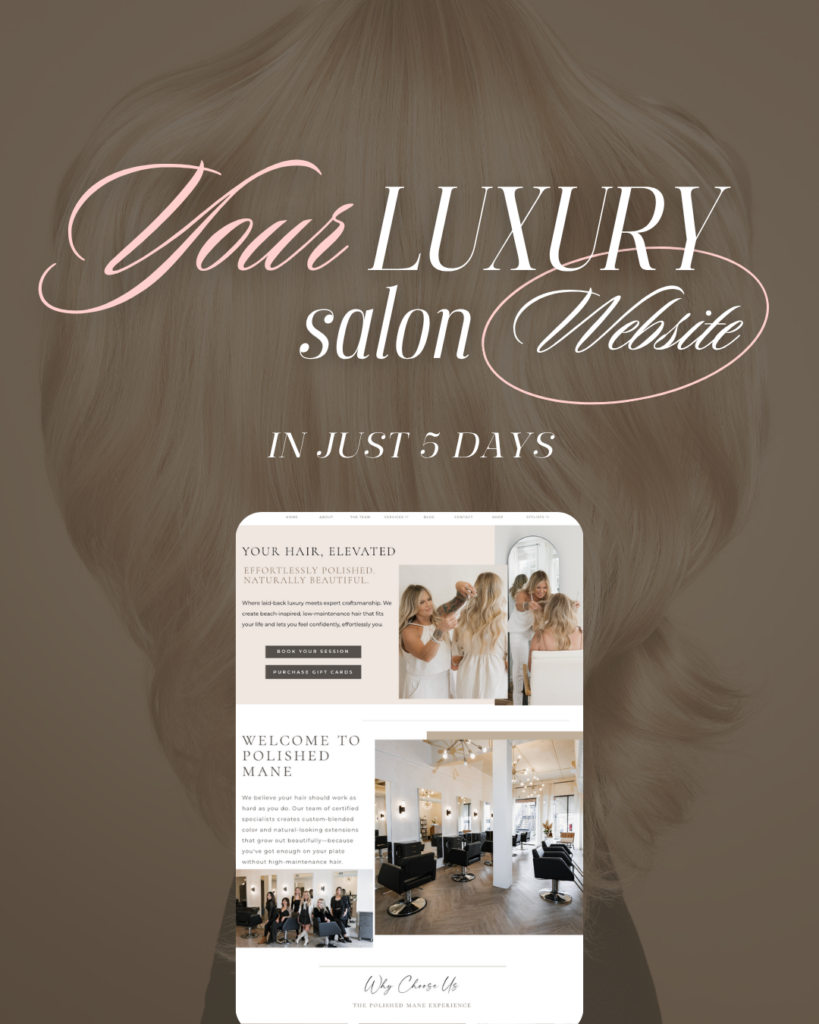
Salon website design should do more than make your business look good online. It should help the right clients find you, understand what you offer, feel confident choosing you, and book an appointment without needing to send three DMs first.
When someone is searching for a new salon, extensions specialist, colorist, or stylist in their area, they are usually not casually browsing. They are looking for a solution now. They want to know if you offer the service they need, whether your work matches their style, what to expect, and how to book.
If your website makes any of that hard to find, they will move on to the next salon in the search results.
A strategic salon website design makes booking feel easy. Here is what your website needs to turn more visitors into appointments.
1. A Homepage That Immediately Tells Clients What You Do
The first few seconds on your website matter.
A potential client should not have to scroll, click around, or guess whether you are the right salon for them. Your homepage needs to clearly explain:
- What type of salon you are
- Who you specialize in serving
- What services you are known for
- Where you are located
- What the next step is to book
For example, “Luxury blonding, extensions, and lived-in color in Boise, Idaho” is much stronger than a vague headline like “Where beauty begins.”
Beautiful branding matters, but clarity is what gets the click.
Your homepage should also include a visible booking button above the fold. If someone lands on your site ready to schedule, do not make them hunt for it.
Your goal: Make it obvious that they are in the right place and give them one clear next step.
2. A Booking Experience That Does Not Create Extra Work
If your salon relies on online booking, your website needs to make that process feel seamless.
Your “Book Now” button should be visible throughout the website, not buried only on your contact page. It should lead directly to your booking platform, whether that is Vagaro, GlossGenius, Square, Boulevard, Fresha, or another system.
A client should be able to go from finding your salon on Google to booking an appointment in just a few clicks.
Before sending traffic to your booking link, check that:
- The button works correctly on mobile
- The booking link opens quickly
- Your service names are easy to understand
- New-client options are clearly labeled
- Your policies are easy to find before they book
- You are not forcing clients to email or call for basic information
The more friction you create, the more appointments you lose.
For higher-ticket services like extensions, color corrections, bridal styling, or major transformations, your website may need a consultation form before booking. That form should be short, clear, and designed to qualify the right client—not feel like homework.
3. Service Pages That Help Clients Choose the Right Appointment
One of the biggest mistakes salon websites make is listing services without explaining them.
A service menu that only says “Balayage,” “Full Highlight,” or “Extension Install” assumes every visitor already knows exactly what they need. Most do not.
Your salon website should help clients understand the difference between services and confidently choose the right option.
Each major service should have its own section or page that includes:
- Who the service is best for
- What is included
- What the appointment experience looks like
- Approximate timing
- Starting investment or pricing guidance
- Maintenance expectations
- A clear booking or consultation CTA
For example, a hair extensions page should explain the type of extensions you offer, who they are ideal for, whether a consultation is required, how maintenance works, and what the investment range looks like.
This does two things: it makes clients more likely to book, and it helps reduce the number of mismatched appointments on your calendar.
4. A Portfolio That Shows the Work You Want More Of
Your portfolio should not just show that you are talented. It should attract the type of appointments you want to book more often.
If you want more luxury extension clients, your website should feature extensions.
If you want to become known for dimensional brunettes, your portfolio should make that obvious.
If you are trying to fill bridal bookings, do not make clients scroll through mostly haircut photos to find wedding work.
Use high-quality, consistent images that reflect your actual work and your ideal client.
A strong salon portfolio should include:
- Before-and-after transformations
- Close-up detail shots
- A variety of hair types and tones when relevant
- Work that reflects your specialty
- Images that feel consistent with your brand
- Captions that identify the service when helpful
Your portfolio is often the final proof someone needs before booking.
5. Mobile-First Salon Website Design
Most salon clients are finding you from their phone.
They may be searching Google between meetings, clicking your Instagram link, or looking for a stylist late at night after deciding they need a change. If your website is difficult to use on mobile, loads slowly, or makes the booking button hard to find, you are losing clients before they ever see your work.
A mobile-friendly salon website should have:
- Fast-loading images
- Large, easy-to-click buttons
- Simple navigation
- Readable text without zooming
- A booking button that stays easy to access
- Forms that are short and easy to complete on a phone
A beautiful desktop website is not enough. Your mobile experience is often the experience that determines whether someone books.
6. Pricing Information That Builds Trust
You do not have to list every exact service price on your website. But clients need enough information to understand whether your salon is within their expected investment range.
When pricing is completely hidden, clients may hesitate to book. They may assume you are out of budget, submit an inquiry without being qualified, or leave your site altogether.
For many salons, “starting at” pricing is the best middle ground.
You can include:
- Starting prices for core services
- Investment ranges for specialty services
- Consultation requirements
- Package options
- Maintenance pricing for extensions
- A note that final pricing depends on hair length, goals, and time required
Clear pricing helps you attract clients who value your work and are prepared for the investment.
7. Testimonials That Answer a New Client’s Concerns
Testimonials are not just nice to have. They help potential clients feel safer booking with someone new.
The strongest testimonials go beyond “I love my hair.” They speak to the concerns a new client may already have.
Look for reviews that mention:
- Feeling listened to
- Getting exactly what they asked for
- A comfortable, welcoming experience
- Long-lasting results
- Expertise with a specific service
- Help choosing the right look or service
- Trust after a previous bad salon experience
Place testimonials throughout your website, especially near booking calls to action and on specialty service pages.
If someone is nervous about trying a new stylist, a strong review can be the reason they finally click “Book Now.”
8. Local SEO So Clients Can Actually Find You
A salon website cannot book appointments if it is not showing up when people search.
Your website should include local SEO language naturally throughout the content. That means using phrases that reflect what people are actually searching for, such as:
- Hair salon in [City]
- Blonde specialist in [City]
- Hair extensions in [City]
- Balayage salon near [Neighborhood]
- Bridal hair in [City]
- Luxury salon in [City]
Your location should appear on your homepage, contact page, footer, and relevant service pages. You should also have a fully optimized Google Business Profile connected to your website.
Local SEO is not about stuffing your city name into every sentence. It is about making it clear to Google—and to potential clients—what you do and where you do it.
9. A Website That Feels Like Your Salon Experience
Your website is often a client’s first impression of your salon.
If your salon experience is polished, high-end, warm, creative, or luxury-focused, your website should feel the same way. If your website looks outdated, generic, or confusing, it can create doubt before someone ever walks through the door.
Your brand should show up in the details:
- Photography
- Color palette
- Fonts
- Copywriting
- Page layout
- Client experience messaging
- The way you describe your services
The goal is not to make your website look like every other salon website. The goal is to make the right client feel like they have found their salon.
Your Salon Website Should Make Booking Feel Easy
A high-converting salon website is not about adding more pages, more words, or more design elements.
It is about helping the right client quickly understand:
- You offer what they need.
- Your work matches what they want.
- You are someone they can trust.
- Booking with you is simple.
When those four things are clear, your website becomes more than an online brochure. It becomes a consistent source of better-fit appointments.
If your current website feels outdated, is not bringing in bookings, or does not reflect the level of salon experience you provide, it may be time for a redesign built around conversion—not just appearance.
Explore our salon website design services →
View our website portfolio →
Apply for a custom website build →
Leave a Reply

© 2024 Petal & Bloom Tech Marketing | All Rights Reserved
